|

Public Gaming Interviews -
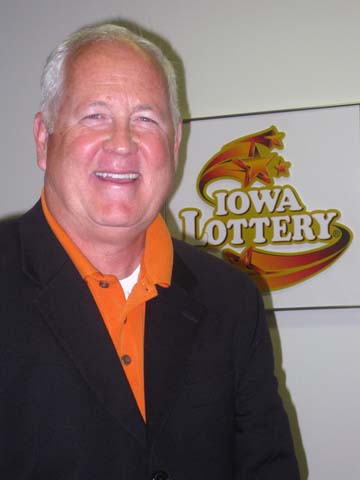
Ed Van Petten, Executive Director of the Kansas Lottery
Kansas picked an inauspicious time to embark on an expansion of gaming casinos. But the economy is improving and things are moving forward in a positive way. The future looks bright indeed for developers hoping to participate in the growth and build-out of the Kansas casino market.
Paul Jason, Public Gaming: What’s being done to keep your casino program on track? What do you expect to happen, or hope will happen, over the next 18 months? What caused the investors to back out – is it a lack of capital or the possibility of competition from Indian gaming casinos, or what?
Ed Van Petten: I should make clear that my perspective is not informed by any inside information about their reasons and motivations. But I do think that the people who withdrew had plenty of capital. They’re investors who assess risk and potential return and decided that this was not where they wanted to invest right now. Investors don’t typically like risk or uncertainties. My interpretation is that the possibility that electronic gaming might come back to the race track in Wichita as well as the possibility of a tribal facility opening up in Wichita posed risks that they did not want to take. When they requested the delay, it was in order to wait until the veto session of the legislature was over. That would have given them some foresight into these issues. The governor just wasn’t willing to let them wait for that. Quite honestly, I supported the governor in that decision because we need somebody to partner with us who is willing to go forward. All of the expert analyses concluded that this is an excellent market with or without a tribal gaming facility. We can’t allow others to call the shots for us. The state of Kansas is a great market and the people of Kansas are ready for these initiatives to move forward now. The governor made the right call by not allowing further delays.
The $25 million deposit made by the investors – is that refundable?
E. Van Petten: Yes. It has already been returned to them.
Were other options explored, perhaps proposing that the investors make a smaller non-refundable deposit? They’re asking you to wait and wait. Seems reasonable to require a smaller non-refundable deposit to ensure their commitment to working hard to find solutions and ways to move forward?
E. Van Petten: All those kinds of terms and conditions are already set up statutorily. The governor didn’t have the authority to change that, or make counter-proposals like you’re suggesting.
Seems like the governor can’t allow himself to be put into the position of not knowing when they’ll be ready to move forward. It doesn’t seem reasonable for investors to expect delays without putting at least a little skin into the game. Of course, it’s their money and investors have the right to make the decision of whether and when to invest it. But what’s to stop them from asking for additional delays and concessions down the road and causing delays to drag on indefinitely?
E. Van Petten: Right. That’s why I do think the governor made the right call in this situation.
The perspective of your experts is that the market is good now and can be expected to improve even more with the upswing in economic recovery. How many casinos are in Kansas now?
E. Van Petten: We have one open in Dodge City now. And we have another one approved. Ground-breaking on the Kansas Speedway Casino in Kansas City was April 30th. In addition there are four Class 3 tribal facilities in the state at this time, plus a small Class 2 tribal gaming facility in Kansas City.
Are investors concerned that there could be more tribal gaming that could increase the competition in a way that could impact the profit potential of new facilities?
E. Van Petten: There is a very strong probability of one more tribal facility in the Wichita area, the Park City facility.
Can investors be confident that there won’t be more tribal gaming facilities approved, in addition to the possibility of the Park City facility?
E. Van Petten: Yes, they can. That facility is part of a lawsuit settlement for a land dispute in Oklahoma. We don’t have a timeline yet, but it will probably open at some point. I do not think there is any other tribal land that is eligible at this time to have casino gaming. There is talk of one possibly going into southeast Kansas. But I talked to the Department of the Interior, and I don’t think that’s very likely. So there are potentially two more, but it will most likely only be one.
It seems like investors do not always appreciate serendipity and surprises in life. Where’s the fun and romance in that kind?
E. Van Petten: Absolutely. They’re always hung up on things like demographics, market sizes and thinking about what their competition’s going to be.
But the competitive landscape in Kansas is one that is somewhat predictable, and so uncertainty about that shouldn’t be an obstacle to making an investment decision.
E. Van Petten: It depends a little bit on what the legislature does with that one bill. But, yes it is fairly predictable at this point.
Could you explain what exactly the issue with that one bill is? What could happen in the “veto session”?
E. Van Petten: There is a proposal to reduce the tax rate at the racetrack facilities, and to allow another vote on approval of electronic gaming in Sedgwick County, which is the county Wichita is in, and where one of our three racetracks is located. This could, of course, increase competition for the casinos, especially the one in our South Central Gaming Zone.
The Kansas Speedway Casino broke ground on April 30th. What else is supposed to happen over the next 18 months with respect to approving additional sites to open?
E. Van Petten: We anticipate that there will be more interest at least in South Central Kansas. That is what we have heard from supporters and lobbyists. We don’t have any names yet, but we think there are at least two viable contenders for the south central area, where Chisholm Creek withdrew. And we should be able to process all that within the next fiscal year, I hope. And then the Kansas City Speedway Casino has a timeline of 24 months from groundbreaking. However, they hope to be open sooner than that. If things go well, I think they can open in 18 to 20 months. So that would be basically April-May of 2012 when they open, or perhaps a few months earlier.
The initiative for Kansas to expand into electronic games began a couple years ago, coincident with the downturn in the economy. Major casino operators like Harrah’s have teetered on the edge of bankruptcy, and capital markets in general dried up. Can we expect that while there will be challenges going forward, the economic recovery really should smooth the way for implementation and that your timelines and agendas will be met?
E. Van Petten: We hope so. And, yes, we do expect better participation from investors and developers in the coming months.
The concept of a gaming facility has traditionally included amenities like lodging and restaurants. What about broadening the appeal with a larger variety of creative entertainment concepts?
E. Van Petten: They’re looking at shopping, bowling, theaters, those types of things. Even the smaller facility out in Dodge City that’s already open is exploring ways to take advantage of its rich history and integrating that into the overall mix of tourist attractions.
Are there any misconceptions in your mind that others might have about what’s happened in the Kansas gaming market, and what’s going to happen, that you might be able to clarify?
E. Van Petten: We have found that no matter how much we try to clarify how the process works; there are some people that just don’t seem to want to listen. The Lottery, the Racing and Gaming Commission, and the Lottery Facility Review Board have all been criticized for decisions that are totally outside of our responsibility. The Kansas state legislature set things up in the best possible way, delineating specific duties and responsibilities to each of us. And now we are each implementing those in the best way we can, leveraging all the tools we have but also working within a system of guidelines and objectives. Our job description is to write a contract based on the terms and conditions of a developer’s best proposal. The Review Board determines whether the contract is good enough, whether it serves the best interests of the state of Kansas. Things like specific locations and many aspects of the total build-out are outside the purview of the Lottery’s responsibility. So I suppose I would like to clarify that we are all working within constraints. The constraints are necessary, an important and useful part of a complex process that must meet a variety of objectives and stay consistent with the needs of different interest groups. Anyone who is interested in truly understanding how and why things happen, or fail to happen, needs to understand the way this system and process works.
Going into negotiations, it sounds like some of the terms and conditions are negotiated by you, but that there are also many statutory requirements and terms and conditions that are predetermined by the Kansas state legislature.
ED: Sure. That’s correct.
What are some of those statutory requirements?
E. Van Petten: The investment and taxation amounts are predetermined in the Lottery Act itself. If there’s only one developer sitting, then that developer could just read the statutes and offer to meet only the minimum requirements. There is nothing to motivate the one bidder from offering more than the minimum. Our ability to negotiate only comes into play when there are multiple proposals. Multiple proposals are needed for us to engage the bidders in a collaborative process of making a deal that works for them and meets the needs of the state of Kansas. We lost that ability in the last round of central Kansas because there was only one proposal.
Do you expect multiple bidders going forward?
E. Van Petten: We have been told there are at least two companies interested. I can’t comment on that exactly, but we do believe there will be more interest and more than one proposal. The economy is coming around, slowly, and we see the financial markets starting to loosen up. So we are quite optimistic that this will enable multiple proposals and more options.
It would seem like whatever could be done to make the process simpler would contribute to attracting more bids.
E. Van Petten: That’s true. At least I hope it’s true because we’re developing somewhat of a template contract for future bidders, clarifying those areas where there is room for negotiation.
How are, or were, the investment amounts and taxation rates determined?
E. Van Petten: All that’s spelled out in the Lottery Bill. The casino and ancillary facilities with it, which they anticipate including a hotel as well as shopping, have to have a minimum investment of $225 million. The Kansas City bid came in well above that. I think it’s about $350 million right now, and the south facility proposed was right at the $250 million range. And we anticipate an even larger investment in the future.
Now, the Dodge City facility is smaller, of course, requiring a minimum investment of $55 million. With the hotel they will be well above that, somewhere in the $80 to $85 million range.
So the bill takes a common-sensical approach to having different requirements for different market and profit potentials. Change of subject - has the launch of Mega Millions met expectations?
E. Van Petten: I thought sales would be a little stronger than they are, but they’re still good and we’re confident that this will be a tremendously positive thing for the Lottery and the state of Kansas. Last week sales were about $168,000, and I anticipated more like $200,000. We’re a small state. An important part of this initiative was to maintain our Powerball sales, and it’s showing an increase, which is excellent since we were concerned that it might be cannibalize by Mega Millions. So that’s especially encouraging.
Can you shift some marketing resources over to Mega Millions, since it appears that your Powerball base is not likely to erode?
E. Van Petten: That’s another reason for the slightly slower start of Mega Millions. Our budget constraints have prevented us from advertising Mega Millions as much as we would have liked. We’ve done a little bit of radio. We anticipate that we can push harder after the start of the fiscal year in July. Mega Millions is growing every week and there’s no doubt that the addition of Mega Millions will be a very positive and impactful addition to our product mix.
How about the other lotto games? Hot Lotto and Super Kansas Cash?
E. Van Petten: Hot Lotto is up slightly and our in-state lotto game, Super Kansas Cash, is staying steady. And we feel really good about that. We are very pleased to have integrated Mega Millions into the mix without negatively impacting our other lotto games. So Mega Millions is incremental and now we can focus on growing all of the different games. However, we are showing some decrease on our keno game, and our monitor poker game. Our instant games are steady but actually off a half of a percent. Overall we are showing a gain of about 2% right now. Of course, we’d like more and expect to finish the year at a higher growth point than that. But 2% year-to-date is still a net gain, and that’s not bad in this economy.
What do you think is causing the softness in the keno and scratch-offs?
E. Van Petten: I think people aren’t patronizing social environments quite as much. And that’s where people play those games. And the smoking bans have somewhat hurt bars and other social environments. Attendance at these venues has gone down. Retailers do tell us they do not have the patronage they used to have. But I’m just speculating and can’t say for sure what exactly causes the softness in those product categories.
You’re saying that the down economy would especially impact products sold in social venues because there it’s not just about the few bucks for a lottery ticket, it’s also about the money it takes to buy drinks and other consumables?
E. Van Petten: Absolutely. Both are factors. Smoking ban and less discretionary funds to spend.
|